
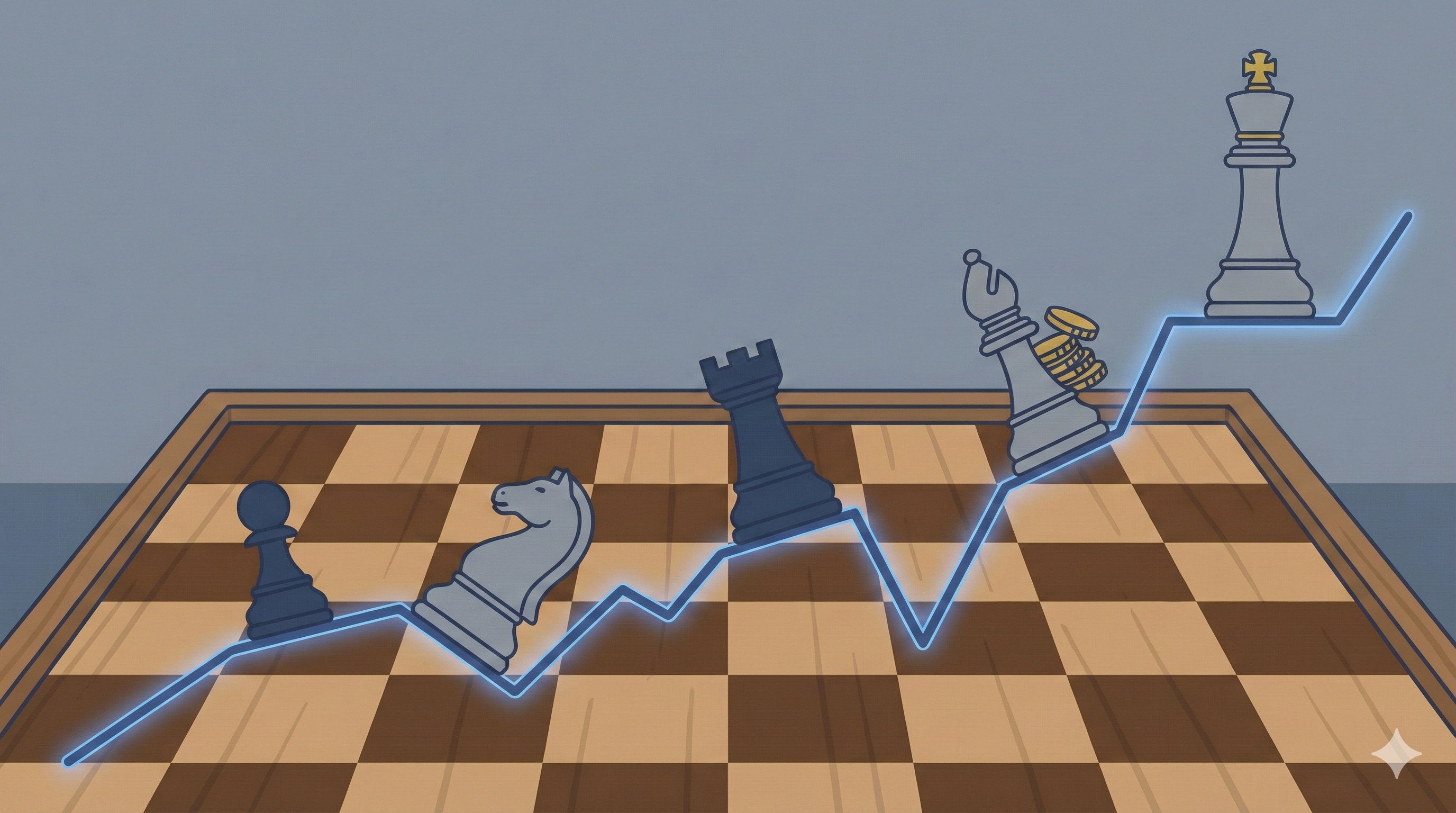
We pick mutual funds based on returns. We compare NAVs, star ratings, rolling averages. What we never compare is what actually drives those returns — because it isn’t stock selection. The largest equity funds in India hold nearly identical portfolios. The same banks, the same IT companies, the same consumer names. If everyone owns the same stocks, what exactly is differentiating their returns?
Lee Freeman-Shor was Co-Head of Equity Research at Old Mutual Global Investors, managing over £1 billion in assets. Citywire ranked him among the world’s top 1,000 fund managers in 2012 and gave him their highest AAA rating. Between 2006 and 2013, he ran an experiment — he allocated between $25 million and $150 million each to 45 of the world’s best investors, with one constraint: they could only invest in their ten best ideas. Over seven years, he tracked 1,866 investments and over 30,000 trades. The period covered the 2008 financial crisis, the recovery, and the European debt crisis — about as brutal a testing ground as you could design. He documented his findings in his book The Art of Execution: How the World’s Best Investors Get It Wrong and Still Make Millions.
His question was simple: ‘What separates the investors who make money from those who don’t?’ The answer was not what anyone expected. It wasn’t about stock selection. The same stocks appeared in multiple portfolios. Some managers made fortunes on a stock while others lost money on the exact same company during the same period.
Freeman-Shor found that nearly half of all investments made by these elite managers — 49% — lost money. These weren’t amateurs. These were the best in the business. And they were wrong about as often as a coin flip.
What separated the winners from the losers was not how often they were right. It was how they behaved when they were right and how they behaved when they were wrong. In other words, the difference was entirely in the behavior of the fund manager after they had executed the BUY leg of the transaction.
#Five Tribes, One Stock
Freeman-Shor identified five distinct behavioral patterns. He called them tribes. What’s striking is that you could give the same stock to all five tribes and get five completely different outcomes.
Rabbits froze when a stock went against them. They did nothing. They held a losing position, waiting for it to come back, paralyzed by the hope that they’d be proven right. Most never were. The Rabbits were the largest tribe, and the worst performers.
Assassins had a simple rule: if a stock dropped 20–33% from their purchase price, they killed it. No deliberation. No hoping. They took the loss and moved on. They were wrong often — but their losses were small, and they lived to fight another day. They followed the Buffett dictum: “Should you find yourself in a chronically leaking boat, energy devoted to changing vessels is likely to be more productive than energy devoted to patching leaks.”
Hunters did something counterintuitive. When a stock dropped, they bought more. But — and this is critical — they only did this when their conviction in the original thesis was intact and they had kept cash reserves specifically for this purpose. They weren’t averaging down out of denial. They were executing a plan.
Raiders were good at buying. They picked good stocks. But they couldn’t hold. As soon as a stock showed a profit, they grabbed it. A 20% gain felt good, so they locked it in. The problem: the stocks they sold for 20% gains often went on to become 100% or 200% winners. They cut their flowers and watered their weeds.
Connoisseurs were the rarest and most successful tribe. When a stock moved in their favor, they trimmed a portion — maybe a third — to lock in some profit. Then they let the rest run. They had the discipline to be “indulgent with winners and impatient with losers” — the exact opposite of human nature.
Same stocks. Same market conditions. Five different behaviors. Five wildly different outcomes.
#Conclusion
The bloodless verdict of the market is pretty consistent across time frames — markets pay the Connoisseur and punish the Rabbit — and the only difference between them is what they do after they invest. Markets don’t care about how smart the fund manager is, how many hours of research have been conducted and by how large a team.
Since we are all so gung-ho about investing in mutual fund schemes — treating our SIP allocations as if they were interest-bearing EMIs — has any of us ever managed to investigate how the fund manager of the fund we’ve invested in actually behaves?
When a core holding crashes 30%, is your manager a Hunter, an Assassin, or a Rabbit? We demand transparency on fees but accept a total blackout on behavior. And if you’ve been thinking along those lines already — how exactly will you find out?
